The Magician by Colm Tóibín
My rating: 4 of 5 stars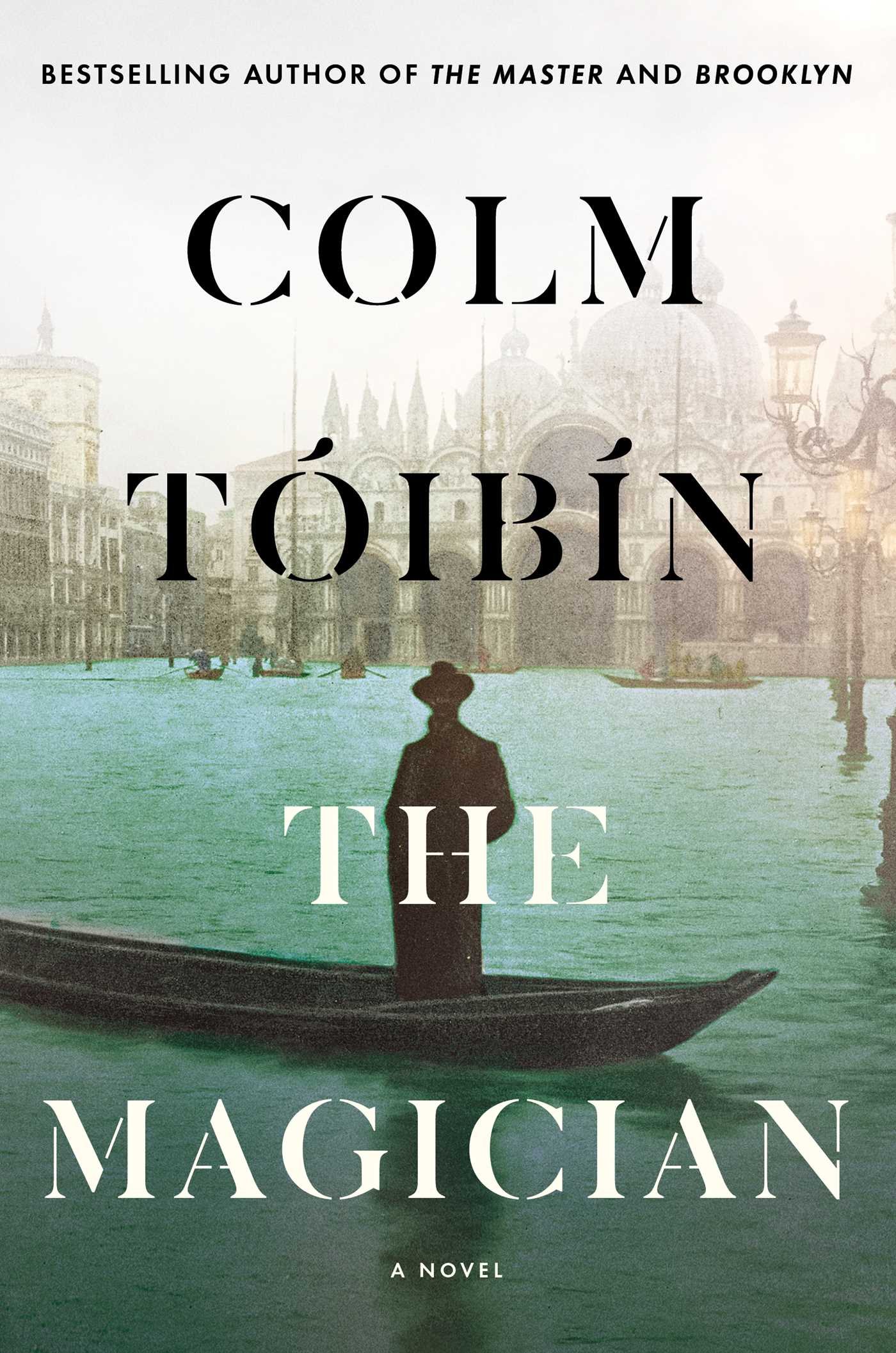
As a longtime fan of Thomas Mann’s work, I was reluctant to pick up this quasi-biography, especially knowing it was written in the contemporary era; a time when the woke agenda’s revisionist impulses are injected into every historical account with the feckless zeal of an mRNA vaccine campaign – turning 18th England into a racial melting pot, and imbuing female protagonists with the physical strength and courage of ten doses of toxic masculinity. The risk of this one getting the tone badly wrong was magnified by Mann’s complex relationship with sexuality. I feared the biography of one of my favourite writers would be reduced to a prop for virtue signalling some banal cliche of the 2020s LGBTQ3.1415PI+ agenda.
I should have trusted in the craftsmanship of Colm Tóibín. From the early pages on, the author shows us that he has a deep love and respect for Mann’s oeuvre. Not only are we plunged straight into the small, mercantilist world of late Hanseatic Lübeck, but the very pacing and tone of the narration mirror the style of Buddenbrooks, Mann’s own autobiographical account of his early life in Lübeck. Tóibín outdoes himself in matching Mann’s own delicate descriptions that bring to life the austere subtlety of the Lutheran city-state, as it gets swallowed by Prussia just as the Buddenbrooks / Mann family’s fortunes become swallowed by those of outside Germany.
And so the biography continues apace, weaving Mann’s great works into the very source of those novels: the tale of Mann’s own life as it unfolds. We are taken to Italy to discover the true story behind one of the most beautifully written novellas in the German language, A Death in Venice. We join Mann and his wife Katia in the sanatorium in Davos to understand whence The Mountain got its Magic. We live with Mann the patriotic zeal that preceded World War 1, then the implosion of Germany and the rise of fascism, culminating in a break in biographical inspiration caused by Mann’s exile to the United States.
That Mann’s works were so uninspired by his newly built house in the sunny suburbs of Los Angeles highlights how destructive was 20th Century fascism for European intellectualism: By the time the war ended, Thomas Mann was already a figment of a destroyed past – he had nothing really to give to Post-War Germany. For me, this reflects a deeper truth: Those of Europe’s intelligentsia whose creativity was not starved to death in Nazi concentration camps, found their creativity saturated and bloated out of them by American hamburgers, hot dogs and ice cream.
But perhaps the best thing about The Magician is how deftly and delicately it tackles the question of Mann’s sexuality. It would be every bit as easy for a modern writer to overegg this pudding by making the entire book be about Mann’s repressed gayness, as it would have been for biographers of more prudish times to underegg it by evading the topic altogether. Tóibín avoids either trap, and instead allows Mann’s own work to dictate the place sex occupied in his life. The result is an account that is by times graphical, but more often nuanced and metaphorical.
The ending of The Magician was touching, but for personal reasons it also caused me to smile wryly. The final passages include a memory Thomas Mann indulges at the end of his life, while on his final trip to Lübeck: it is a story his mother told him as a child about the trip Bach took to Lübeck to meet the then more famous composer Dietrich Buxtehude. I was struck by the contrast with another book I recently read on that very subject, called Something of his Art: Walking to Lübeck with J.S.Bach, by British author Horatio Clare. Tóibín’s beautifully written account of Bach’s journey – though only a few paragraphs; though only a story inside a memory inside a biography – is a thousand times more impactful that Clare’s entire book.
And that underscores the main point here. To attempt the biography of a writer as good as Thomas Mann, it takes a writer as good as Colm Tóibín.
View all my reviews
Skip to content