Hamlet by William Shakespeare
My rating: 5 of 5 stars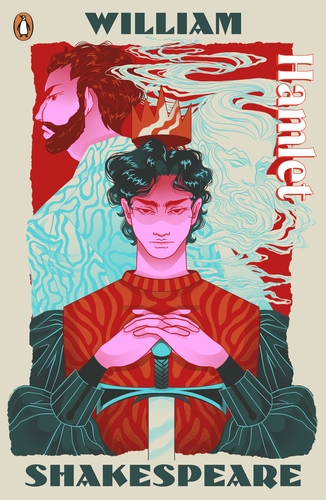
To read or to watch on stage? That is the question when it comes to Shakespearean plays. And there is a clear consensus among middle class parents of teenagers condemned by the school curriculum to the former: it is better to take seats amidst a sea of theatregoers, than to suffer pages full of the slings and arrows of outrageous Elizabethan word salad.
I will make so bold as to disagree. I think you need to do both. First read and study, then go and watch a great performance. And while reading the first few of the Bard’s plays might feel toilsome, it is the only way to truly steep yourself in a language that – let’s face it – has grown archaic even to the most literate among us.
So as I picked up Hamlet to read it for the very first time, I thanked my English teachers who, 35 years ago, I once cursed for forcing me to chore through Merchant of Venice, Romeo and Juliet, King Lear…And I’m glad I saved the best for last.
For one thing, it is replete with quotable quotes I knew but did not know came from Hamlet; phrases woven deep into our cultural fabric – everything from the Rotten State of Denmark, to ‘Never a Borrower nor a Lender be’, to ‘the lady doth protest too much, methinks’, to the latest Taylor Swift song, and many more I’ll leave for the reader to discover himself.
Beyond that, Hamlet is a cracking good story. It is the mother of all whodunnits – for though Hamlet’s father the king is dead, was he murdered? And if so, by whom? It is also the progenitor of the ‘unreliable narrator’ device. Can we believe that Hamlet’s interaction with the ghost is something more than a manifestation of his crescent madness?
And it is the prototype for the psychological thriller: the internal struggle the young prince endures when faced with the decision of whether to avenge his father’s death or to accept it not only gives rise to the most memorable quotable in Shakespeare’s oeuvre, but it is also a delicate and meaningful treatise on the nature of courage and cowardice. The poignancy with which Hamlet’s prevarications contrast with the bold decisiveness of the similarly wronged Laertes is so sharp it almost causes the reader to wince.
Most of all, though, we readers of this great play must never forget that Hamlet is what the middle class parents of high school scholars proclaim it to be: a set of instructions to actors, so that they can put on a show. Now that I have suffered my slings and arrows, I can’t wait to book a ticket and see this masterpiece come to life.
View all my reviews
Skip to content